


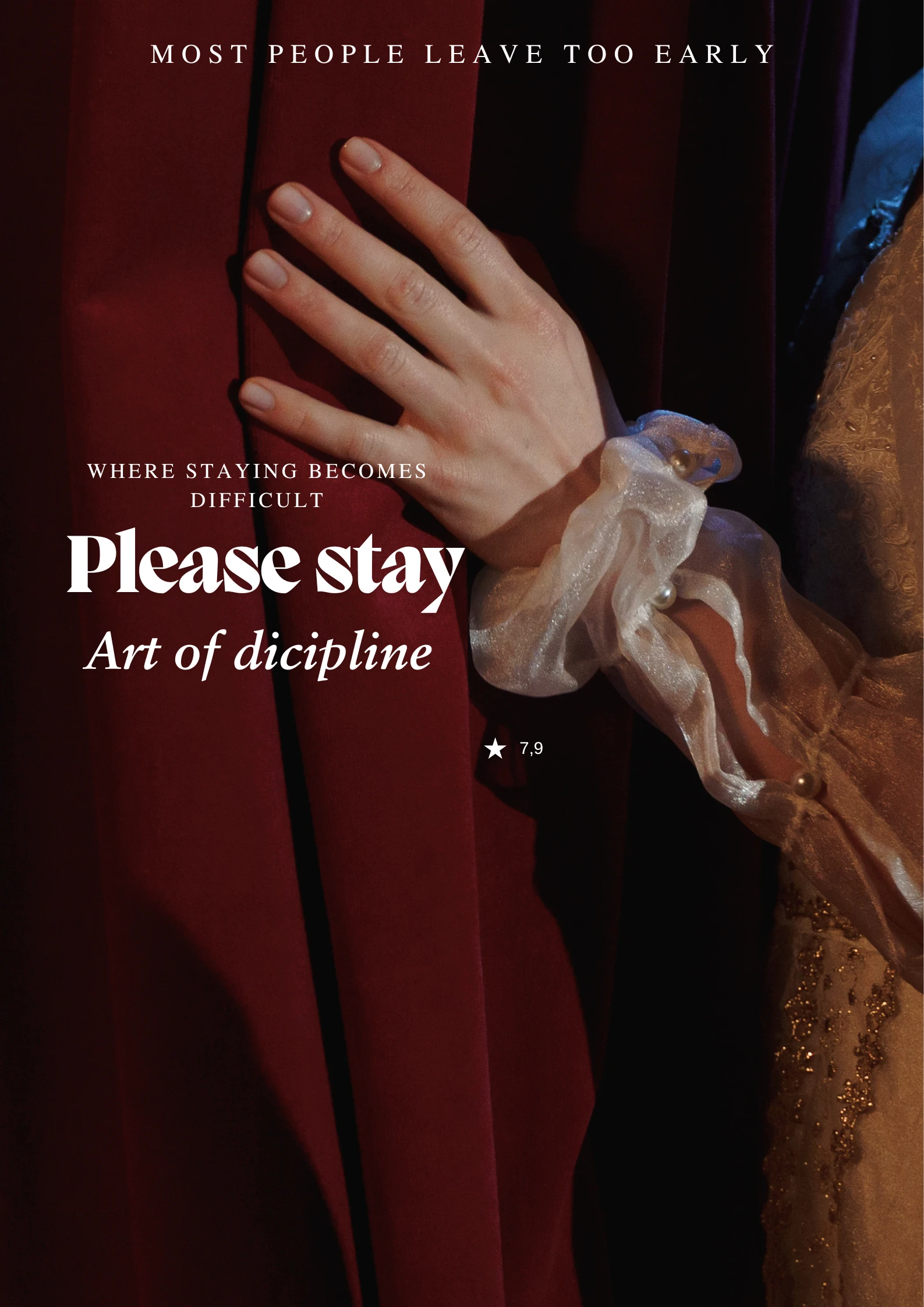
The Art of Staying
One of the most underestimated skills in an artistic practice is not technique, but the ability to remain.
Most artists do not stop working because they are tired, nor because they have reached a limit in their ability. They stop at a more subtle point—when the process becomes unclear, when the next step is not obvious, when the work no longer responds immediately.
This is where staying becomes difficult.
Not physically, but internally.
The hand may continue, but attention drifts. The eye stops observing with precision. The artist begins to move without really seeing. In many cases, this is the moment where decisions become automatic, and the work loses its depth to stay is to resist that drift.
This requires discipline—not the discipline of doing more, but the discipline of not escaping.
Not when everything is clear, but when the artist sustains attention in the absence of clarity.
This is where perception refines, where sensitivity deepens, and where the work begins to move beyond repetition.
Most people leave too early. They leave the moment before it opens
Because staying demands patience, and more importantly, it demands trust—trust that clarity does not precede the work, but emerges from it.
To stay, then, is not passive. It is an active form of engagement. A conscious decision to remain with the process, even when it offers no immediate reward.
And it is precisely in that space—between not knowing and not leaving—that the work begins to transform.